Woody Powell made his way to Korea in November 1952, just nine months before the armistice that would end the Korean War was signed at Panmunjom on July 27, 1953.
At the age of 18, Powell signed on for four years in the Air Force. Soon he was an Air Policeman, serving in the then-infantile United States Airforce in the Mojave Desert and Japan before his time at the K-2 airbase in the modern day province of North Gyeongsang, South Korea.
In Korea, Powell became part of the K-9 unit at his base. There he performed night patrols with his dog, Bodo, a German Shepherd from Japan among his other duties.
“You are a gentleman”

“We did liaison work with the National Police,” Powell said, explaining one of his duties while serving in Korea. The National police were an institution that remained from Japanese colonialism in Korea, he said.
“One night there was this young boy there and an old man, and the National Police brought an old woman who had been caught stealing and started beating up on her,” Powell said.
“I stopped that action and told them to let her go, because I had that authority over the National Police,” Powell said.
He watched the young boy consult with the old man, and leave the room.
“Eggs were very valuable there and he gave me this egg and said, in English, you are a gentleman,” Powell said.
“I took the egg and with my trusty Jackknife, I busted a hole in one end, sucked the contents out, consumed it with appropriately gusto,” Powell said.
“Then, with a ballpoint pen, [I] drew a picture of the boy’s face on the egg and gave him the eggshell back,” Powell said. “And that established a relationship with that boy.”
“Everything was done through a kind of sign language”
The next time that Powell ran into the boy at the National Police Headquarters near his base, the boy approached him.
“I want to show you something,” the boy said, and took Powell to a farm.
Large Kimchi pots sat outside of the farmhouse, just over a berm behind the National police headquarters, about 50 meters away.
The farm was owned by an elderly couple, who had been taking in children from the countryside who had been orphaned by the war. The boy who led Powell there was one of these children.
“We had no conversation at all,” Powell said. “We really couldn’t talk much. Everything was done, you know, through a kind of sign language and so forth.”
“But they did make it clear that they needed clothing for the kids.”
Powell wrote a letter home to his family in Berkeley, California asking for help to gather clothing for the children at the farmhouse.
Powell’s younger brother, David, was three years younger than he was, and still in high school, working as the assistant manager at the Fox movie theater.
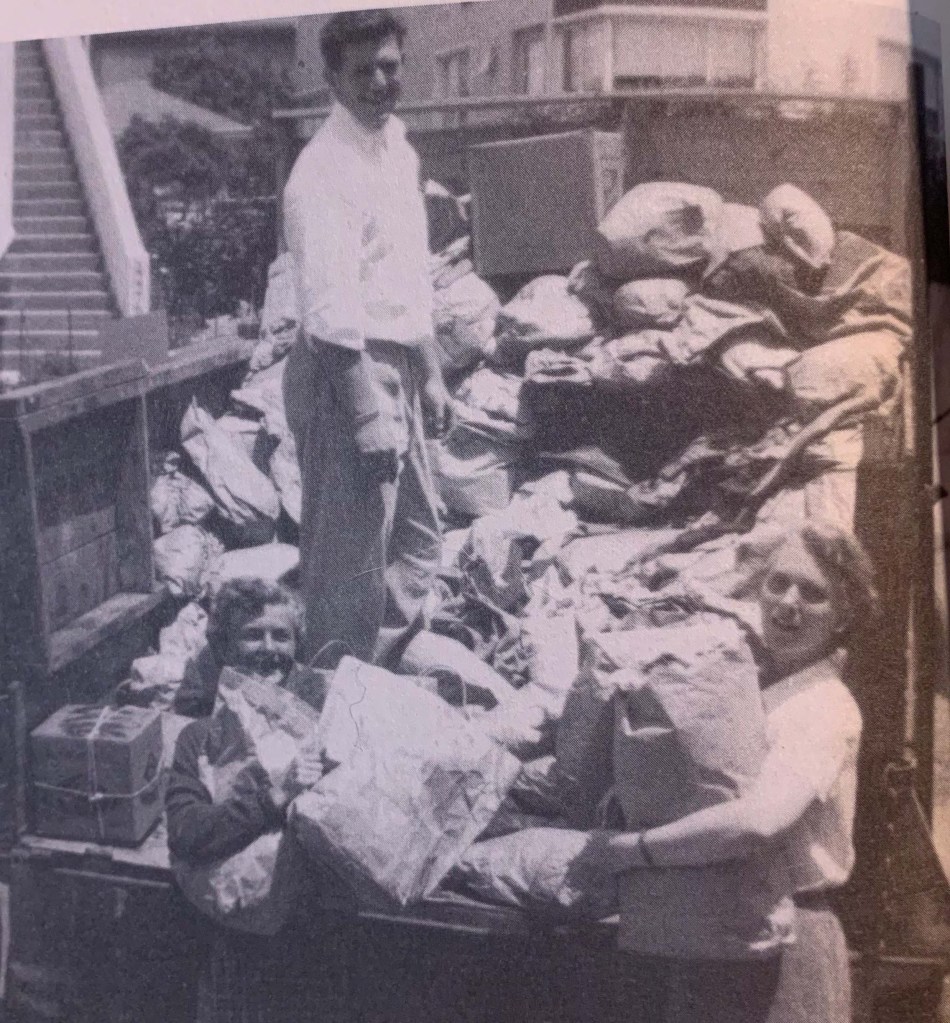
“He had the idea of having a Saturday matinee performance and the price of admission being clothing for the kids,” Powell said.
Powell’s request for clothing was published in the Berkeley Gazette, and his brother’s idea brought in boxes of donations.
“I got a call from my CEO saying Woody, we’ve got a problem,” Powell said. “We’ve got a whole bunch of boxes here and no place to put them.”
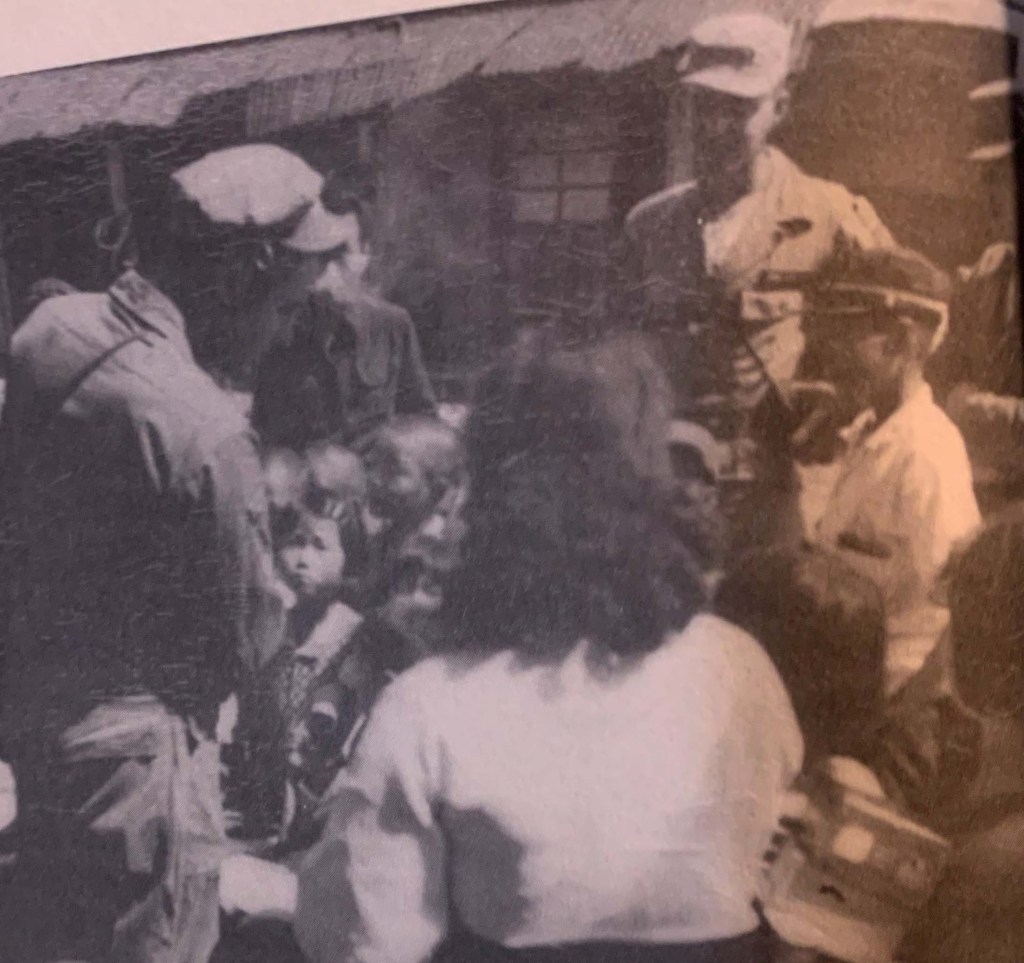
Powell made his way to the APO– his base’s post office– where he was greeted by a mound of boxes.
He requisitioned a jeep, a trailer, and a Scotsman who “had to drape himself over this pile of boxes in the trailer to keep it from tipping over.”
“We drove up to the farm and distributed the clothing, and as we were doing it we realized there was an awful lot of clothing that wasn’t suitable for kids,” Powell said.
The remaining western clothes– adult’s jeans, suits, belts, shoes, ect.– were in good condition, and Powell’s young friend knew what to do with them.
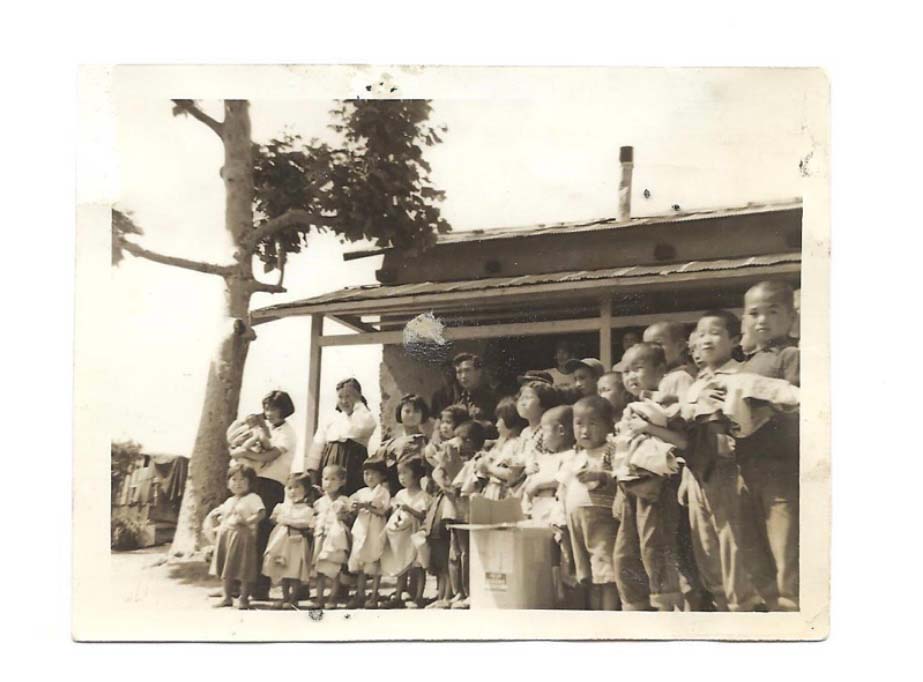
The boy brought Powell to the black market in the city of Tageu, where they sold the clothes for rice and building materials.
“And we started the construction of a dormitory,” Powell said.
Soon, Powell reached out to the Methodist Minister on his base, K-2. The minister arranged for the new facility to receive funding as an orphanage.
“And then it was out of my hands,” Powell said.
“We came to know each other as having fought against each other in that war”
In 1983 Powell was traveling across China with a group of Chinese railroaders, where they stopped in Chengdu.
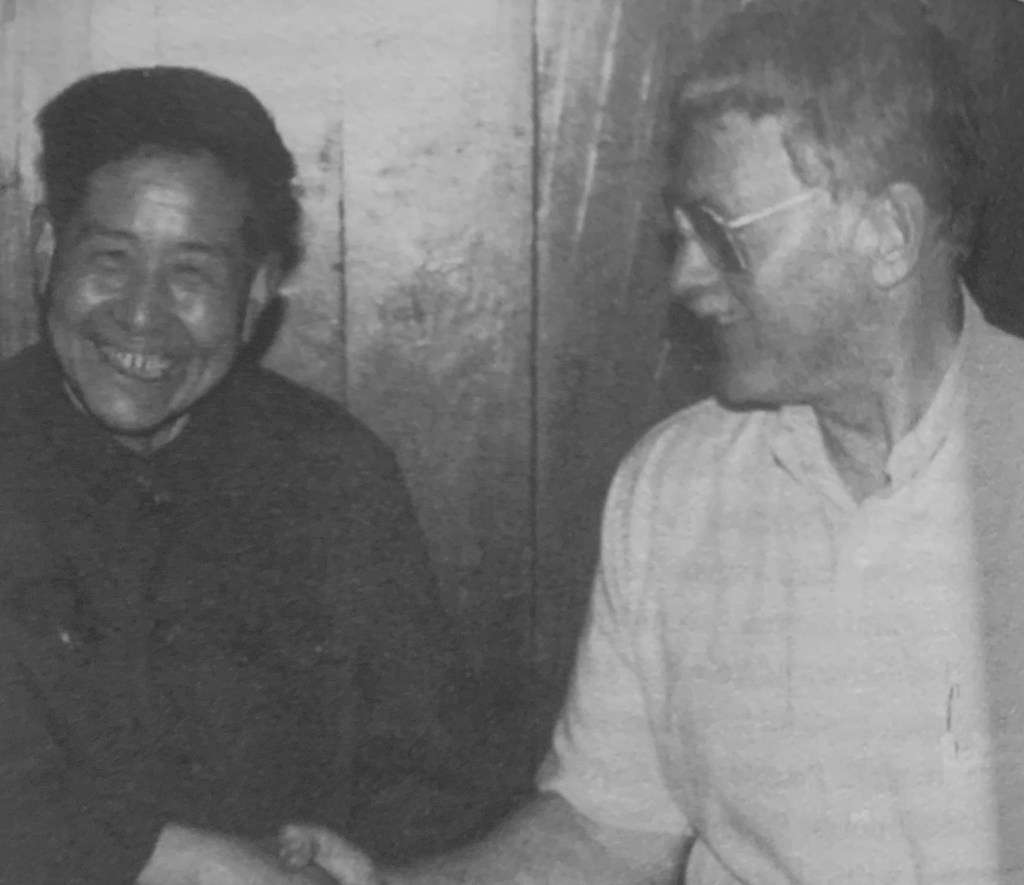
“One night I was walking and this fellow pushing a bicycle came up beside me and wanted to talk,” Powell said.
“There happened to be a place where people would accost tourists and try to improve their language skills,” Powell said. “ And Ming-Fu was one of those.”
As the two men began to talk, Powell asked him how old he was.
“I asked him if he’d been a soldier in that war in Korea, because he was the right age,” Powell said.
“Yes, I spent 1,000 days there,” the man replied.
“And so we became known to each other as having fought against each other in that war,” Powell said.
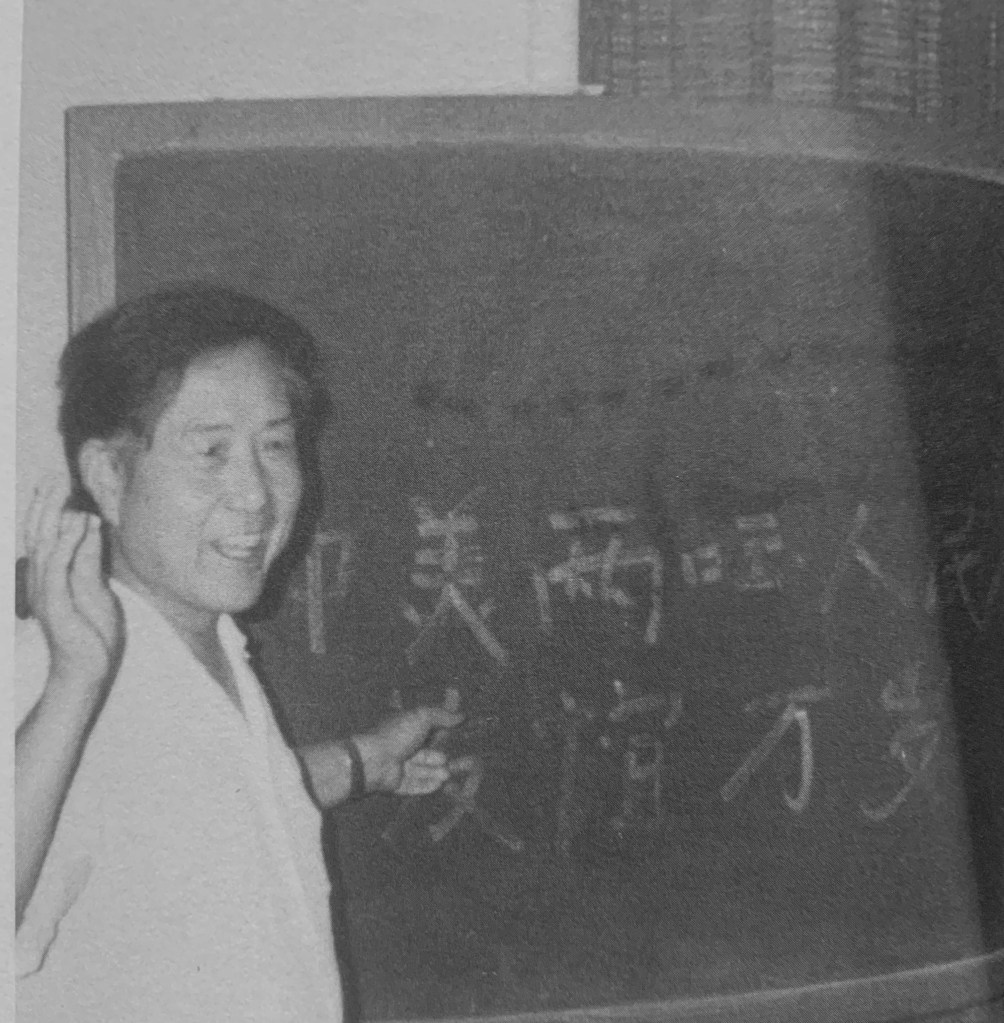
Zhou Ming-Fu had been born in old China, before the cultural revolution, and was taught english by a methodist minister who Ming-Fu had not seen since 1949, when the ministry was run out of China. He fought for the Chinese People’s Army, oftentimes charged with communicating with prisoners of war who spoke english.
“When I got back here, in St. Louis, we kept up correspondence,” Powell said. “He wanted books; he wanted materials to teach children; he was a teacher.”
Powell collected history books that were being cycled out of a school in St. Louis, and send them on to Ming-Fu.
“In 1985, I was able to arrange a visit for him to come here and spend three months with us with his wife, Shi-xian,” Powell said.”Those are wonderful three months; we took them everywhere and he went places on his own.”
Ming-Fu was able to teach at an American school while he was here, but at night he and Powell dedicated themselves to recording a dictation of Ming-Fu’s life.
At the end of his trip, Powell had compiled a complete transcript of Ming-Fu’s life story. Soon, he would write his own and the two would publish their stories together in a book titled “Two Walk The Golden Road” by Wilson M. Powell and Zhou Ming-Fu. The book was published in 2000.
“Clear your conscience if you have a problem there– as a lot of us do– by working for peace”
In 1991 Powell read an article by Bill McClelland about a Veterans for Peace chapter that was being established in Saint Louis.
“When I saw veterans for peace, I thought, Jesus Christ, I mean, that it’s a no brainer<” Powell said. “ Veterans should be for pleace.”
Powell joined the Veterans for Peace, eventually serving four years as Executive Director for the organization.
In the 90s, Powell traveled to war zones in Columbia for the Veterans for Peace.
The United States was sending money into Columbia, earmarked to fight cocaine production.
“The money was going into the [Columbian] military, the military was giving it to the auto defences– which is a paramilitary group controlled by the military– and they were using it to run people off their land, and raise cattle and whatever,” Powell said. The money, he found, was “having very little to do with the eradication of cocaine.”
“I went down there to kind of confirm that– or discover that activity and confirm it– and talk to people,” Powell said. “I spent over three weeks down there.”
In Mexico, Powell spent his time in war zones in Chiapas doing similar research for Veterans for Peace.
Reflecting on what he might say to the veterans returning from the Middle East now, Powell
“Now that you know better, do something to avoid the next war, to keep us out of it,” Powell said. “And [recent veterans] are in a good position to do that,” he said, mentioning that veterans in younger generations have already formed other peace-minded groups after returning home.
“I would say join one of these organizations, and get involved, and clear your conscience if you have a problem there– as a lot of us do– by working for peace.”
Woody M. Powell– now 89 years old– lives with his wife in the suburbs of Saint Louis, MO. Zhou Ming-Fu– now 92 years old– became a resident of a hospital near his family’s home China after the death of his wife. Both men have adult children.
Powell was in Korea November 1952 through July 28, 1953.

 Grace E. Marion
Leave a reply to Ruth Hoctor Cancel reply